





Why Study Astronomy with Swinburne?
Why choose SAO?
- Study astronomy entirely online, from anywhere in the world.
- Learn from professional astronomers who are actively contributing to our understanding of the Universe.
- Choose the pathway that suits you, from individual units through to a Master of Science in Astronomy.
- Join a global community of astronomy students who share your passion for exploring the cosmos.
Learn from world-leading astronomers
Swinburne Astronomy Online (SAO) is delivered through the Centre for Astrophysics & Supercomputing (CAS) at Swinburne University of Technology. CAS is one of Australia's leading astronomy research and teaching centres.
SAO students learn from research-active astronomers whose work spans many areas of contemporary astrophysics, including galaxies, cosmology, black holes, gravitational waves, pulsars, stars, planets, and computational astrophysics. Our instructors are actively contributing to astronomical research and bring their expertise and discoveries directly into the classroom.
The SAO teaching team includes internationally recognised researchers, including Highly Cited Researchers whose publications rank among the world's most influential scientific papers, as well as astronomers recognised among the top 2% of scientists globally.
The scientific excellence of CAS has also been recognised internationally. The 2023 Shaw Prize in Astronomy was awarded to Professor Matthew Bailes, former Director of CAS and current Director of the Australian Research Council Centre of Excellence for Gravitational Wave Discovery at Swinburne.
Swinburne astronomy research has consistently received the highest rating of 5/5 ("well above world standard") in the Australian Government's Excellence in Research Australia (ERA) assessment for Astronomical and Space Sciences.
Excellence in teaching
SAO combines the flexibility of online learning with the academic standards of a research university. The program is designed to provide a rigorous understanding of astronomy while developing the skills needed to interpret and communicate scientific ideas.
SAO has contributed to Swinburne's recognition for excellence in postgraduate science education, including:
- Ranked #1 in Australia for Overall Educational Experience in a Postgraduate Science and Mathematics Course (Source: Good Universities Guide 2024).
- Ranked second in Australia for Teaching Quality in a Postgraduate Science and Mathematics Course (Source: Good Universities Guide 2024).
- Swinburne ranked among the world's top universities for Physical Sciences in the Times Higher Education World University Rankings.
- Swinburne is recognised among the world's leading universities in global rankings including the Academic Ranking of World Universities (ARWU) and QS World University Rankings.
A global astronomy community
SAO attracts students from around the world, including professionals, science educators, amateur astronomers, and retirees with a passion for understanding the Universe. Students study alongside a diverse international community of astronomy enthusiasts while gaining a university qualification.
You can read student testimonials and explore student stories describing the SAO experience. You can also see where some of our graduates have gone after completing their studies here.

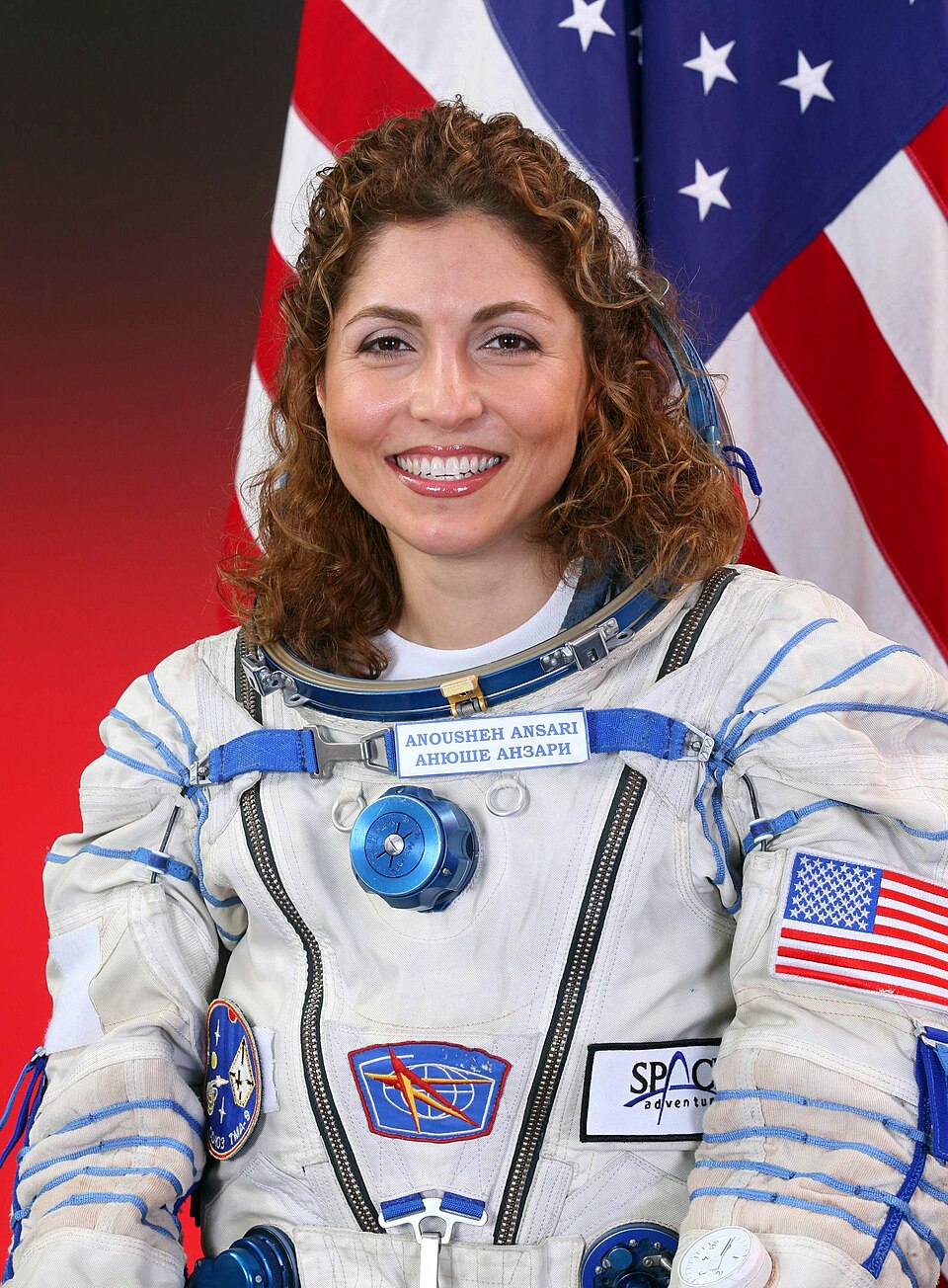
Former SAO student Anousheh Ansari, CEO of the X Prize Foundation and International Space Station crew member, revisited SAO in 2024. Pictured are Dr Sara Webb, Anousheh Ansari, and Alister Graham. |
|
Meet our instructors
Our SAO instructors are professional astronomers with expertise spanning optical, infrared, and radio astronomy, as well as theoretical and computational astrophysics.
Their research explores the Universe across a wide range of scales: from cosmology and the large-scale structure of the Universe, to galaxies, black holes, stars, planets, pulsars, neutron stars, and globular clusters. You can read about what inspired some of our instructors to pursue astronomy here.
Swinburne astronomers have access to major international research facilities, including the twin 10-metre W. M. Keck telescopes in Hawaii, among the world's largest optical telescopes. Swinburne also hosts powerful supercomputing facilities that support research involving large-scale simulations, astronomical surveys, and the analysis of enormous astronomical datasets.
SAO instructor Dr Sara Webb was named in the 2025 Forbes 30 Under 30 Asia list for Healthcare and Science.
Swinburne astronomy news
Swinburne astronomers and students regularly contribute to discoveries, public outreach, and astronomy communication.
|
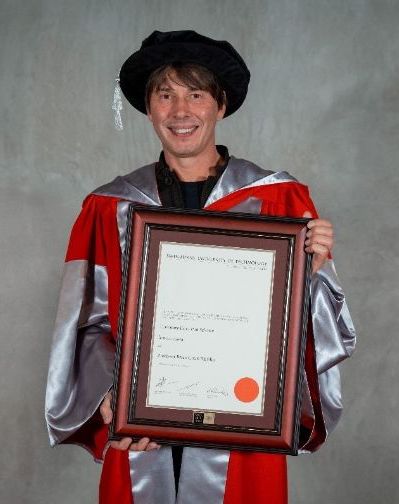
Professor Brian Cox CBE FRS was awarded an honorary Doctor of Science by
Swinburne University of Technology in 2022 for his significant contribution
to communicating astronomy, physics, and astrophysics worldwide.
For current news from the Centre for Astrophysics & Supercomputing, click here. |

