MORE FACTS
Information about SATURN'S
surface conditions, voyages to Saturn and satellites orbiting and not forgetting
it's rings can be found too. Similar information about the conditions
and atmosphere on VENUS
, NEPTUNE
, and also PLUTO
including data about it's moon called Charon. URANUS
, EARTH
, MERCURY
,
MARS
, JUPITER
can also be found with loads of great facts and info. To find out
more about SATURN'S
RING SYSTEM this site is great. It explores
the rings using images and artwork. Or for information about
Jupiter's
rings and also it's satellites.
OUR SUN
Our local star, the sun
, is the energy supply for our life here on earth.
Huge sun spots
move across the surface of the sun
expanding and contracting as they go and their nature can be observed here.
Winds of charged particles called solar
wind's cause changes in the earths magnetic
field. The upper atmosphere called the solar
corona can be seen. Find
out about the SOHO mission here
.
OUR MOON
Find out loads about the earth's satellite, the moon
here or see some great pictures of the earth
and the moon here or more pictures of the moon
here.
PICTURES
For some great pictures from the big planet
Jupiter to the smallest planet pluto, there are impressions and images
here!
Mercury
Venus
(or here
)
Earth
Mars
(Or see a close encounter with mars from
hubble)
Jupiter
(Or view the ancient storm
in the atmosphere of Jupiter)
Saturn
Uranus
(or the bright colours of Uranus
)
Neptune
(Or view Neptune's stormy
disposition)
Pluto
See the earth's closest neighbour, the
moon
, from the space telescope, Hubble.
More pictures of all of the planets in our solar
system and information about each can be found at NASA'S
PLANETARY PHOTO JOURNAL . This is a great
web site to find out information about any planet.
INTERIOR AND SURFACE
OF THE PLANETS
More data and interesting facts can be found
out about all of the planets which have comparisons to the earths statistics
all at this site
.
The interior and surface of the planets can be
explored here too:
Mercury
Venus
Earth
Mars
Jupiter
( More
about Jupiter)
Saturn
Uranus
Neptune
Pluto
There is another web page with loads of
pictures and descriptions of the surface of Venus
and information about it's structure.
MISSIONS TO PLANETS
AND THE SEARCH FOR LIFE
There have been many missions to other planets
using probes especially to Mars
. However many probes have also been sent to Venus
such as the pioneer venus orbiter, and also to Jupiter
and there have been many spacecraft missions to Jupiter
. The Cassini Huygens
probe has also been sent to Saturn.
As mars the the planet the most like our own,
the earth, there has been much interest in the search for life on mars.
There is a whole site by William Sheehan about the history of observation
and discovery on Mars
and could there be water
on mars? However, Jupiter's fourth largest satellite,
Europa
has many clues to possible life which may lay buried in Antarctic ice.
Or, is there ICE
on the moon? Or how about life
on mars ? See a photo of a real meteor
from mars, or pictures of some of the many mars
meteorites found on earth since 1815! Could the meteors
hold the answer to the search for liquid
water on mars or even evidence for primitive
life on early mars?
Voyager
2 was sent in 1977 past many of the planets gathering information
about the atmosphere and magnetosphere for example. Voyager 2 passed
Jupiter
, Saturn
Uranus
, and Neptune
and pictures from voyager can be seen of Jupiter
, Saturn
, Uranus
and Neptune
. In February 2007, a Solar
probe will be sent to find out more about the sun.
Around 2010, a probe called the Pluto-Kuiper
Express will be sent to pluto to find out more about the cold planet
.
Space now seems sweeter as scientists discover
sugar
in space! This could be a key finding into the understanding of how
life evolved here on earth. NASA
and NRAO have
both written accounts of this discovery.
MODELS OF THE SOLAR SYSTEM
BLACK HOLES
Information on black holes including spinning stars and galactic bulges
can be found here!.
Find out about measuring radiation
from matter entering black holes, or black holes that blow
as well as suck! Find out loads of information about falling
into a black hole or view the FAQ's
about the weird black holes. How would you search
for black holes? How do they form
?
METEOROIDS
When a meteoroid hits the moon detectable optical
flashes are produced. On 18th
November 1999 , the flux of meteoroids associated with the Leonid
meteor shower produced these flashes on colliding with the moon.
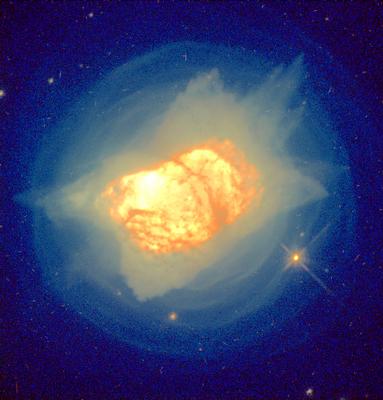
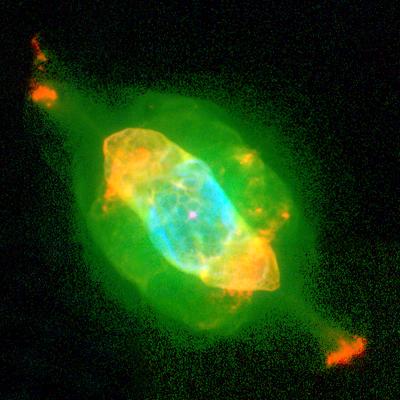
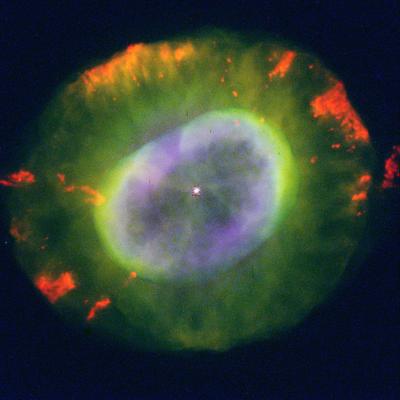
AMAZING PICTURES FROM HUBBLE
See a feasting black
hole blowing bubbles, or peer into the heart of the Crab
Nebula , or even see multiple galaxy
collisions . Or see a lit up supernova
ring , a cosmic
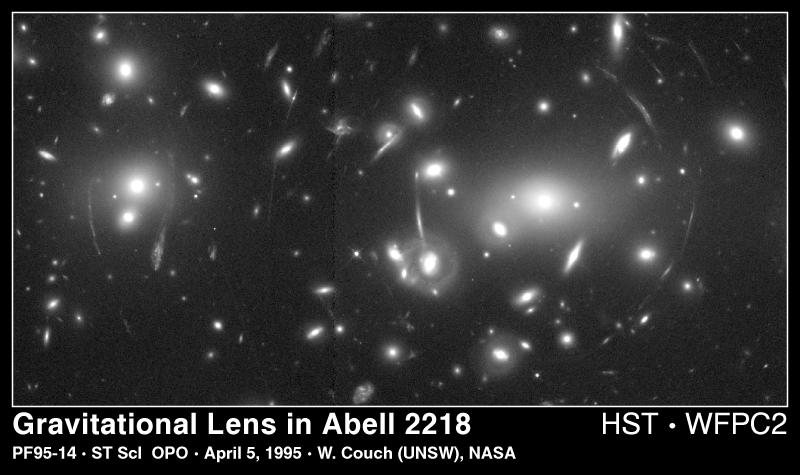
magnifying glass , galactic
silhouettes , or even the light and shadow in the Carina
Nebula . See lone
black holes adrift in the galaxy, dying
stars, star
birth or glittering
stars in a nearby galaxy, an expanding bubble
in space, fireworks of star
formation , or a grazing encounter between two
galaxies .